
Three years ago, the Intergovernmental Panel on Climate Change warned for the first time that how we talk about climate change may be as consequential as the science itself. In its 2022 report, the panel found that politicized rhetoric and deepening polarization are stalling progress on climate policy and action. Nowhere is this divide more entrenched than in North America, where the problem is spreading and growing more severe.
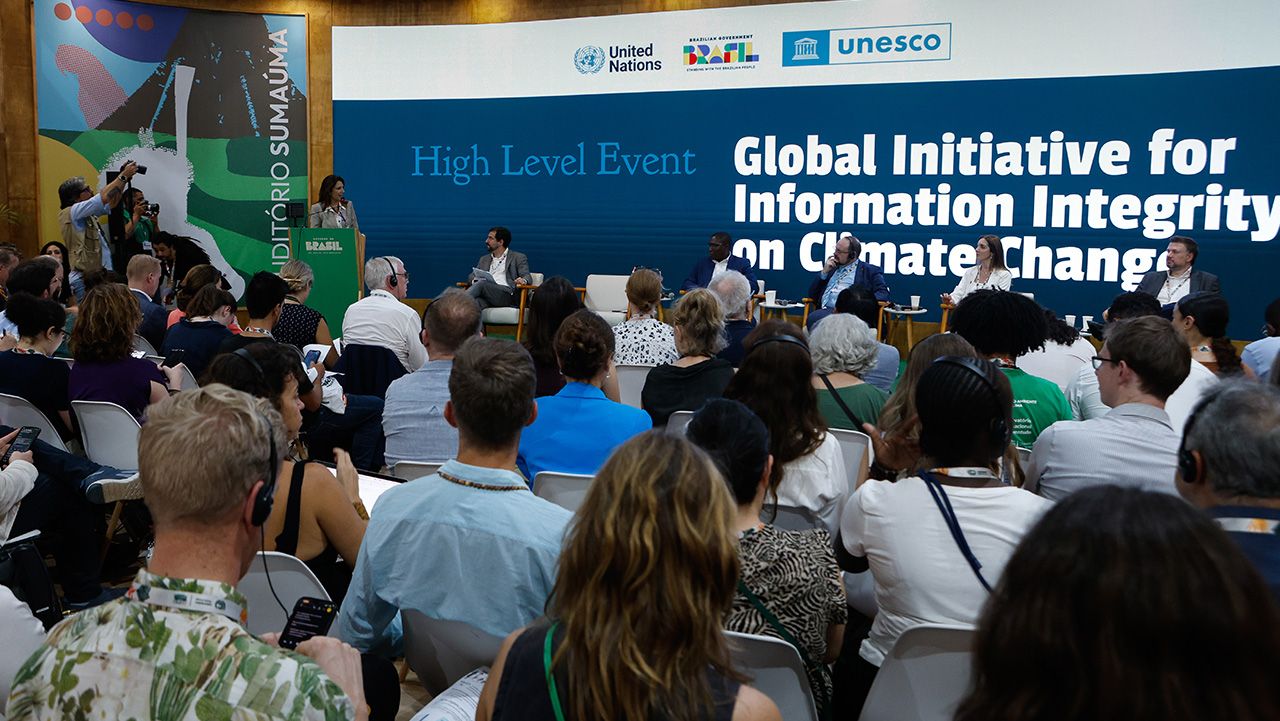
At this year’s United Nations climate negotiations, COP30, climate disinformation was a key part of the agenda. In fact Canada, along with 14 other nations, signed the Declaration on Information Integrity on Climate Change. Through the declaration, they are committing to promoting evidence-based information on climate change and addressing disinformation. This is the first time climate disinformation has been directly addressed at a COP.
The Troubling Rise of Climate Delay Tactics
Climate disinformation isn’t new. Think of Exxon withholding its climate research for four decades. A new wrinkle, however, is that outright denial is unfortunately complemented by a concerted effort by fossil fuel proponents to delay action through massive lobbying and advertising campaigns. Another is that disinformation and delay tactics are spreading more rampantly than ever due to algorithms and online influencers. These efforts target not only science and policy but also obscure basic facts about climate impacts, solutions, and advocacy and activism.
COP30: Lobbying, Greenwashing, and the Fight for Integrity
The development at COP30 on the integrity of climate information is important. At the same time, the UN meetings are a direct target of aggressive lobbying and greenwashing campaigns.
Despite Brazil being the first host to require those registering to disclose their funding source for attending, 1,600 fossil fuel lobbyists were in attendance at the global climate meeting. This is more than the size of any country’s delegation except for Brazil’s.
Fossil fuel proponents also spend millions on greenwashing campaigns. At COP27, for instance, the industry spent $4 million USD on ads aimed at influencing delegates and negotiations.
Climate disinformation is essential to address because it leads to inaction, such as the failure of COP30 to directly address fossil fuels.
That’s why it’s so critical that a group of 24 nations came together at the recently concluded UN talks to release the Beléēm Declaration on a Phase-Out of Fossil Fuels and announce that the first International Conference on a Phase-Out of Fossil Fuels will be held in April 2026, co-hosted by Colombia and the Netherlands. These countries are illustrating what the times call for. Calling out the problem for what it is—fossil fuels are responsible for the majority of emissions driving climate change—rather than adding to greenwashing and disinformation.
Some countries are already going from words to action. Take Colombia, a significant fossil fuel producer, which has stopped licensing new fossil fuel projects and is working on a transition plan. This shift is inevitable as renewable energy is now outcompeting fossil fuels when it comes to the economics. Now Canada has to decide whether it shows up for the conversation and starts moving in the right direction, or remains captured by fossil fuel interests and disinformation.
Canada’s Climate Disinformation Problem
When it comes to Canada, honest conversations about climate change and fossil fuels are not taking place. Despite the strong, derailing influence disinformation has on literacy and engagement, it largely goes unchecked. In fact, parts of Bill C-59, which is federal legislation that addresses greenwashing, were rolled back as part of the recent federal budget.
This is unfortunate. The Centre for Media, Technology, and Democracy at McGill University illustrates the pervasive impact of disinformation in Canada in its Climate Obstruction: The State and Spread of Climate Disinformation in Canada report.
The report outlines the pervasive narratives driving climate delay. The first is Hypocrisy and Elitism, which is that those pushing for climate change action are elitist and hypocritical, making them illegitimate. Sixty-seven per cent of Canadians support that notion.
The second narrative is Ethical Oil, or the belief that Canada’s oil and gas is produced in more environmentally responsible and socially ethical ways than other countries. Absolutionism is the third, which argues that Canada should be absolved of its climate action responsibilities because other countries are more responsible for emissions. That resonates with 53 per cent of the public.
The self-explanatory Unreliable Renewables and Ineffective Electric Vehicles narrative is something that 41 per cent of Canadians believe. The final narrative that gains traction is Indigenous Involvement, with 40 per cent of the public supporting the idea that oil and gas development is an opportunity for economic reconciliation, regardless of whether that is the case or not.
The following graphic describing the taxonomy for ‘Discourses of Delay’ is a helpful starting point for insights into the disinformation ecosystem (from the Centre for Media, Technology and Democracy’s report Climate Obstruction: The State and Spread of Climate Disinformation in Canada).
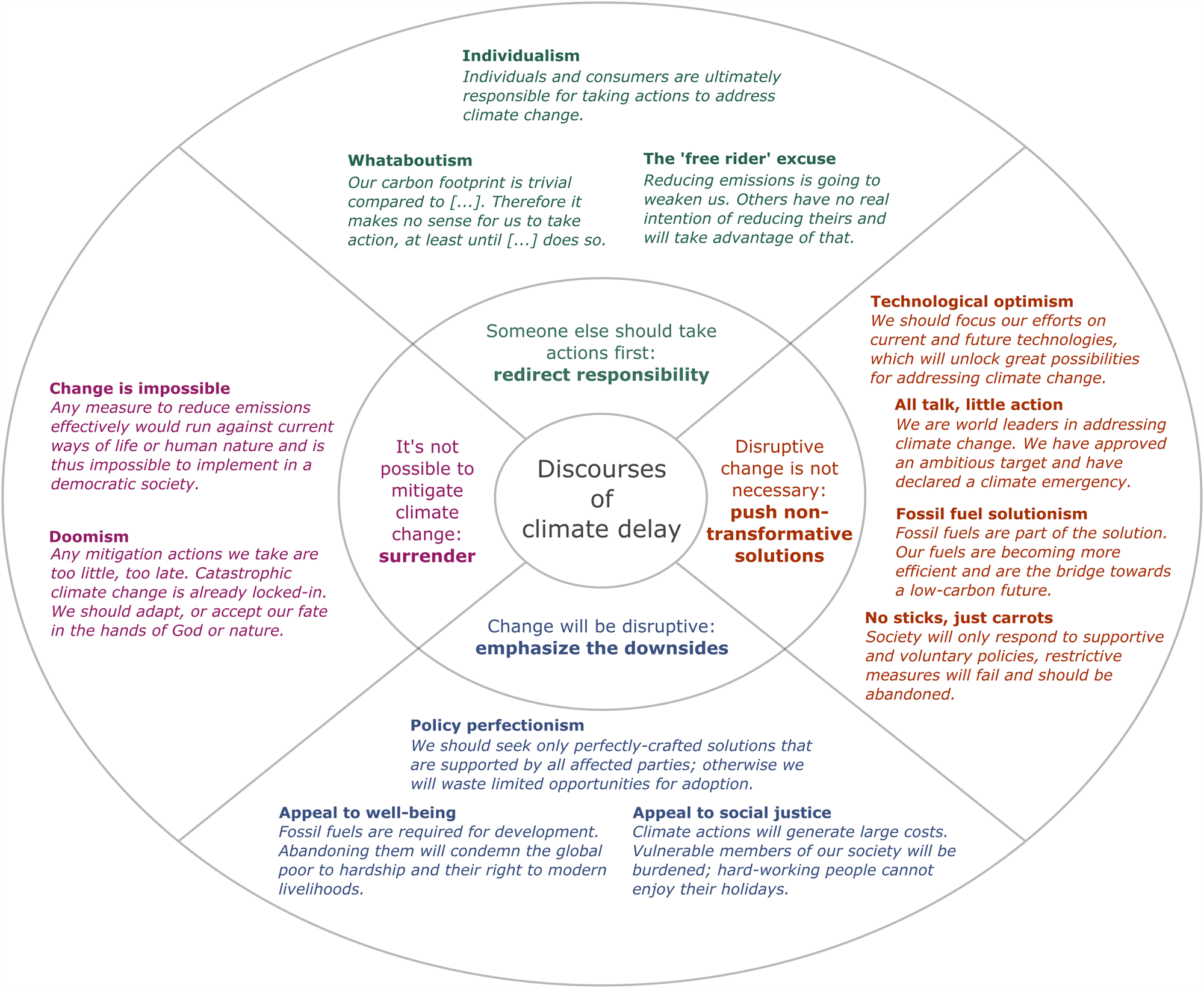
(Click image to enlarge). Taxonomy for ‘Discourses of Delay’ from Lamb, W., Mattioli, G., Levi, S., Roberts, J., Capstick, S., Creutzig, F., . . . Steinberger, J. (2020). Discourses of climate delay. Global Sustainability, 3, E17. https://doi.org/10.1017/sus.2020.13.
Media’s Role in Spreading or Countering Disinformation
Traditional media isn’t helping much in building climate literacy. Re.Climate’s 2025 analysis of national media in Canada shows that climate reporting is scant compared to coverage of the economy, tariffs, and other issues. Rarely is the primary cause of climate change (burning fossil fuels) mentioned, and measures to address climate change are typically presented without context for the current or intensifying state of climate impacts. Instead, climate change appears more as a political or cultural war issue, even in mainstream outlets.
Tackling Climate Disinformation: 4 Steps You Can Take Right Now
So what can be done, particularly given the lack of political leadership in Canada to tackle climate disinformation?
1. Call on political leaders to tackle climate disinformation.
Particularly as new fossil fuel projects are being debated as part of national building, now is not the time to gut already insufficient legislation requiring polluters to be honest about their activities and impacts.
2. Focus on regular engagement with diverse public and stakeholder segments across multiple channels.
Setting a narrative is much easier than trying to undo a false one. Offering accessible, actionable information that people can connect to their daily lives is an important part of this engagement.
3. Actively counter disinformation.
Start by distinguishing whether misinformation or disinformation is at play. Misinformation occurs when someone shares content they believe is correct without intending to harm. Disinformation is the constructed, deliberate effort to mislead and obstruct action. Kindly point out when misinformation is being shared. Be more pointed about disinformation.
4. Counter misinformation by applying Climate Action Against Disinformation’s “truth sandwich” method.
This means leading with a truth, such as “renewable energy is now very reliable.” Next, point out the disinformation and who is driving it. Then, top it off with another truth: “renewable energy is now the most cost-effective option.”
While Canadians are increasingly swayed by politicized online media outlets and influencers, when it comes to climate change, people do listen to their families, friends and peers. Having climate conversations about the causes of climate change, its impacts and solutions can help increase literacy and overcome polarization and disinformation. The rest of the world is starting to have these conversations, so let’s start in Canada as well.
Cara Pike is Re.Climate’s Senior Advisor and the founder and executive director of Climate Access, a non-profit focused on building political and public support for climate action. Cara is a pioneer and leading thinker in climate communications. She regularly advises government agencies and nonprofit organizations.
