
Canada is currently experiencing a climate policy backlash. Across the country, political leaders have abandoned the carbon tax—once considered a common-sense policy with bipartisan support—while nationally, policies such as the Greener Homes Loan and the EV mandate have been put on hold. Meanwhile, Canadian banks and the Canada Pension Plan have abandoned their net-zero targets.
This is perhaps why the March 2025 release of the book Abundance by American journalists Ezra Klein and Derek Thompson has caused such a stir among progressives. Because at a moment when climate action seems politically unpopular, Klein and Thompson are offering an answer.
They argue, among other things, that environmentalists have for too long framed climate action around the losing politics of sacrifice and scarcity. They call on environmentalists to instead marry the life people want with the clean energy the planet needs, focusing on building, growth, and possibility.
However, they also call for deregulation and are unclear about how to address the impact of corporate interests and influence on people’s support for renewable energy.
Prime Minister Mark Carney appears to have adopted the “abundance” framework, as evidenced by his “build, baby, build” slogan and an emphasis on building housing and fostering economic growth.
That’s why Re.Climate decided we needed to unpack what “abundance” means for Canada, its possibilities and its weaknesses in our November 2025 webinar: “Is ‘abundance’ what’s missing from the climate movement?”
It was a great conversation, with five panellists sharing their impressions of the book’s arguments: Oliver Anderson, Caroline Brouillette, Louise Comeau, Kwatuuma Cole Sayers and Chris Russill.
Watch the Recording
Is there potential in abundance?
It has become clear through recent policy rollbacks and public opinion data that the language of far-off targets, “emissions” disconnected from their source and abstract benefits, is no longer sufficient for building the social mandate we need for robust climate policy.
The abundance narrative of Klein and Thompson, however, focuses on material outcomes and concrete benefits for people. That also means changing how government works.
“Their call to action is to pursue abundance as a way to pursue institutional renewal…it’s not just a promise of more, but more of what matters,” said Louise Comeau, Re.Climate’s senior advisor.
Comeau said it was possible to see this rhetoric not only in Carney’s Bill C-5, for example, but also in what progressive leaders around the world are saying.
At the 2025 Progress Summit held in the UK in late September, the Prime Ministers of Canada, Iceland, Australia and the UK called for a positive agenda framed as progressive patriotism to counter negative and grievance-based political nationalism.
Although critics voiced skepticism about Klein and Thompson’s deregulation arguments, the authors’ assertion that government is not providing people with what they need does ring true.
“They recognize that a lot of our problems result from the fact of government ineffectiveness,” said Chris Russill, Re.Climate’s academic director.
“[Klein and Thompson] try to imbue the conversation with an urgency and impatience about getting government to work again—implementing and delivering on promises to people and the public goods about which people get excited and are passionate.”
How climate advocates are responding to abundance
“For a long time, the environmental movement has been defined by what we oppose,” said Caroline Brouillette, executive director of Climate Action Network Canada (CAN-Rac).
CAN-Rac has been taking the idea of asking for things, instead of being against them, seriously. And they’re using an abundance narrative as their framework for demanding a pan-Canadian electricity grid.
“I think that’s where there’s a lot of generative potential for us…identifying and being very concrete about the things we want to happen, things that people can see and touch,” said Brouillette.
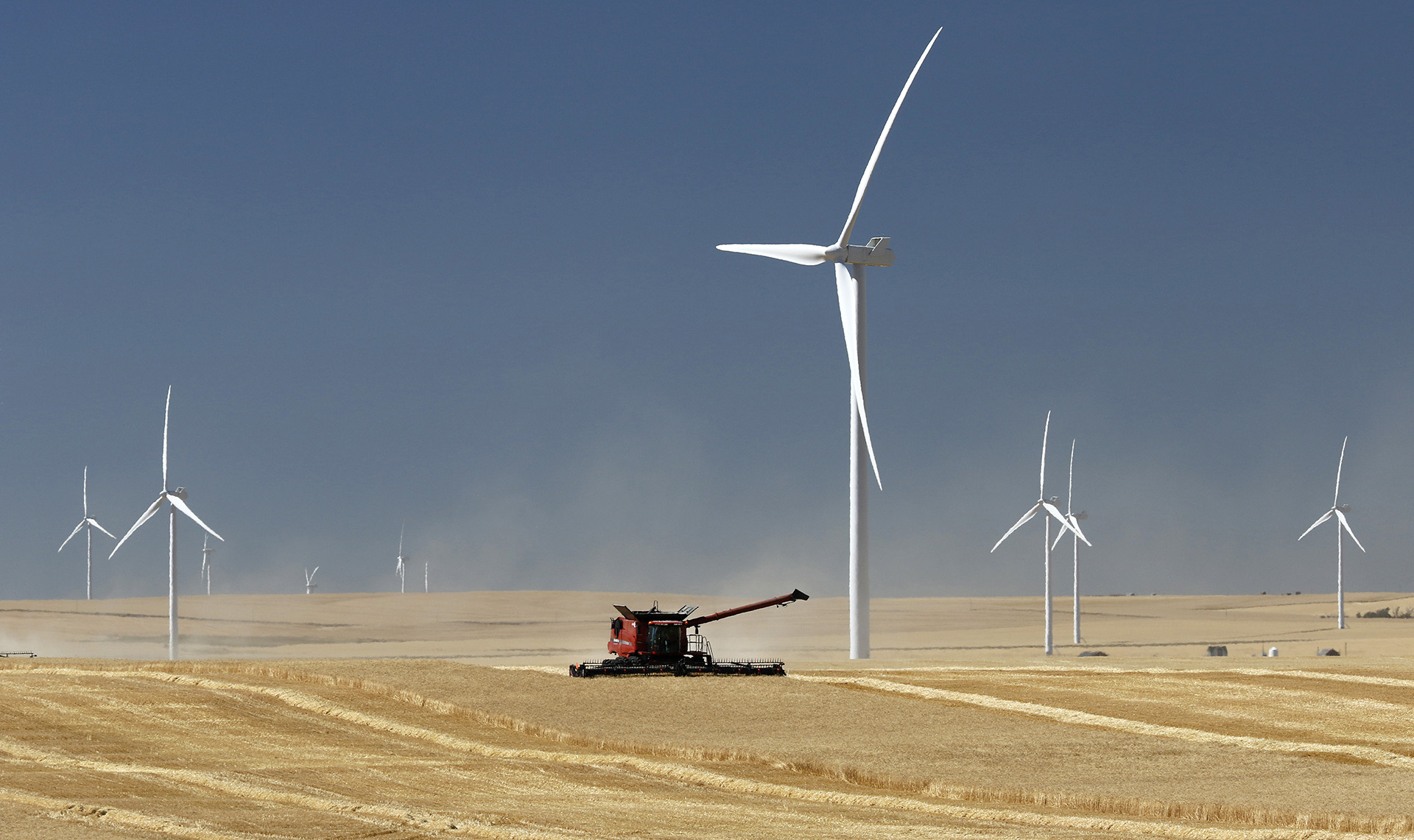
Kwatuuma Cole Sayers, executive director of Clean Energy BC, sees potential in streamlining government processes to accelerate the construction of projects like wind turbines—essential infrastructure for advancing the clean energy transition.
But, he added, abundance can’t just be about government institutions. It also has to include a conversation about governance.
“I think as we move towards a politics of implementation, we need Indigenous rights holders to be included. So that capacity to build needs to include the capacity to recognize Indigenous jurisdiction as a form of productive abundance.”
The risks of an abundance narrative
One consistent criticism of Klein and Thompson’s book is its fixation on regulation as the barrier to building clean energy, rather than looking to other factors.
“What the abundance guys get right is that government has been ineffective,” said Comeau.
“That’s not simply because of the laws and regulations though. Some of that is the oil and gas industry we have that continually gets in the way of trying to build out a clean energy infrastructure at the pace that is desired and demanded.”
Oliver Anderson, former director of communications for former Minister of Environment and Climate Change Steven Guilbeault and current vice president of communications and growth at AquaAction, also has questions about how the abundance narrative squares with the realities of a rapidly changing climate.
“I think [the Liberal government] is still struggling a bit to figure out how to manage trade barriers, while also recognizing that our atmosphere has a limited capacity to take up more C02 emissions,” said Anderson.
There is also a concern that the government’s approach to abundance may result in less public consultation, as well as less regulation.
“We need to be building the right things, but doing it the right way, by involving communities, ensuring that rights are respected and upheld from the get-go. Fairer is faster,” said Brouillette.
Chris Russill also cautioned that the abundance narrative is already being co-opted by oil and gas companies, which, in many ways, are doing very well with the status quo of how government operates.
“A lot of our problems are rooted in the fact that incumbents want to stay incumbents, and they don’t want a new world to be born or the next generation to define their own conditions of existence that can be within government, or that can be within a market, or that can be within communities,” said Russill.
“Our incumbents really are in the extreme concentrations of wealth and power in the oil and gas sector and the politicians who support them.”
With the budget having just come out this week, there are still questions about which direction Mark Carney’s government will go. But given his signals that the emissions cap is on the chopping block, and undefined pauses on other climate policies, there’s clearly a need for climate communicators to present their own abundance agenda.
How to shape a climate abundance narrative
1. Lead with the positive
Re.Climate has been testing how people respond to climate narratives with an abundance frame. So far, the results are promising.
“The reaction in our survey was very strong for messaging that is positive, that is about growing things, not letting things go,” said Comeau.
Comeau added that in order for a climate abundance narrative to be successful, the movement needs to decide “under what conditions are we comfortable saying yes,” to things like housing and clean energy infrastructure that need to be built, even if it makes our landscapes or communities look different.
2. Be explicit about what you want to build, how you want to build it, and with whom
Just as CAN-Rac is explicitly arguing for a national electricity grid, all the panellists agreed that it’s important to be extremely concrete about your demands, so they can’t be co-opted.
This means being clear about what projects you want in your backyard, what partnerships you want to see—through community benefit agreements or First Nations ownership for example—and who should be part of the conversation.
3. Position the environmental movement as a movement that builds
“The message I’ve been saying is that environmentalists want to build,” said Brouillette.
“We want to build a future, not the past, and we want to build the right things the right way.”
Share examples of when clean energy infrastructure has led to tangible benefits for communities. Focus your messaging on the future your organization or government wants to see, not only on what needs to be avoided.
4. Use abundance as a “big tent”
While we might disagree on the details of Klein and Thompson’s book, abundance as a narrative can be a space to bring people together and accommodate a variety of positive visions of the future.
By starting with abundance, we can have a conversation about climate change and what we need to do about it.
Stay tuned for our research findings, and let us know how you are thinking about abundance and climate communications at ghada@reclimate.ca
