
Watch the entire conversation here. Read the full report here.
Priority drops, concern remains
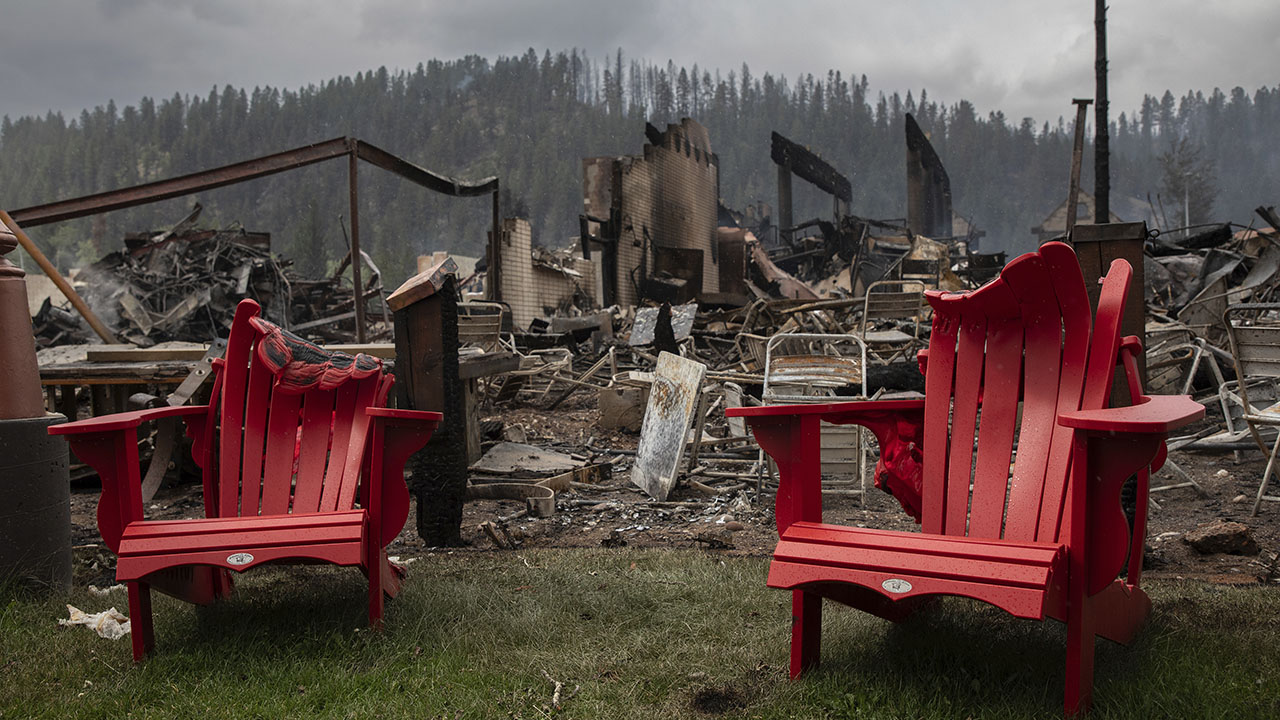
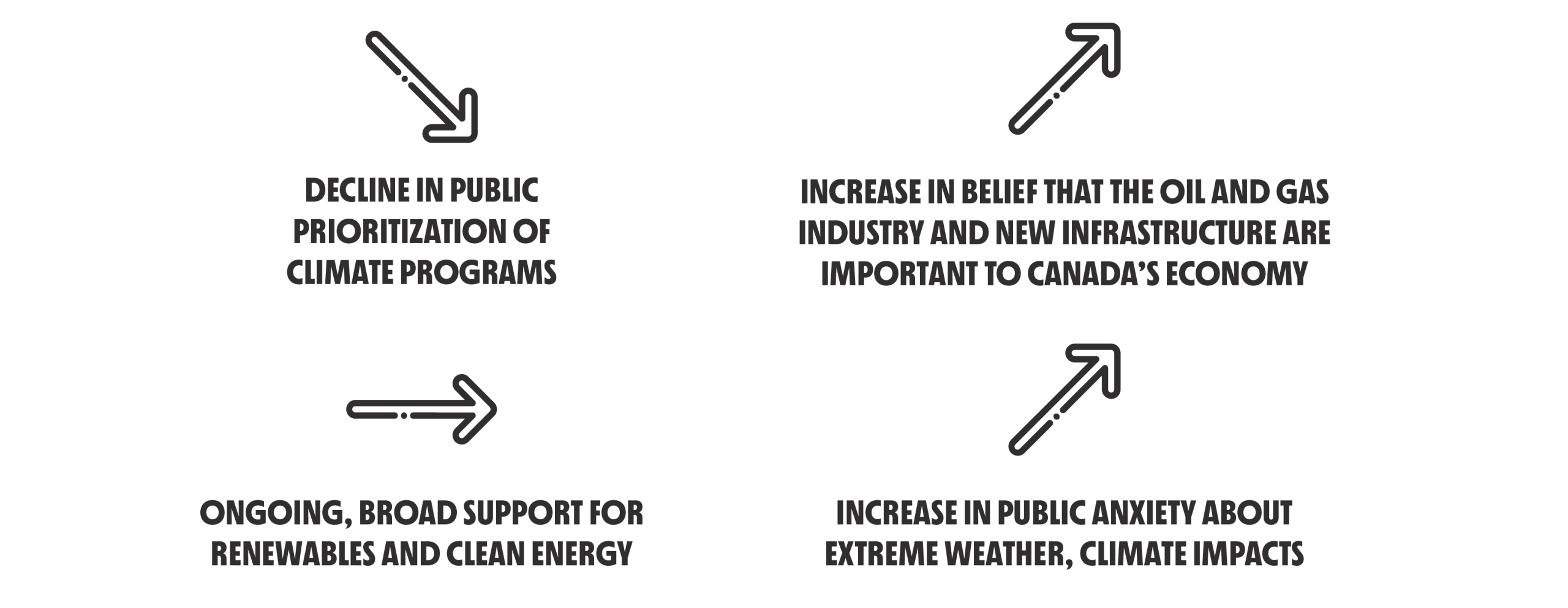
Canadians’ priority on climate action has dropped since Donald Trump became U.S. president and threatened the Canadian economy and sovereignty. But the decline in priority is a longer trend since the COVID pandemic and inflation.
Although the decline in priority is often described as a drop in concern, it is mostly a story of climate concern competing with more immediate fears. While there are worrying trends in public opinion, over two-thirds of Canadians still report being concerned or very concerned, and seven-in-ten view climate change as a serious or very serious threat.
Current Conditions
Tailwinds
Concern
Most Canadians are worried about climate change and want governments and industries to tackle the problem.
- 69 per cent are worried about the impact over the next five years (Abacus Data, 2025e).
- 76 per cent are concerned about its impact on future generations of Canadians (Ipsos & Tree Canada 2024).
Extreme weather, fires and climate impacts
Canadians understand that climate impacts (especially fires) are getting worse and will continue to accelerate.
- 72 per cent say wildfires are more frequent.
- 61 per cent expect wildfires to happen more often in the future (Leger, 2024).
Clean energy
Clean energy solutions have high support; most of the public wants renewable energy prioritized.
- 77 per cent want more solar power; 72 per cent want more wind (Angus Reid Institute, 2025b).
- 77 per cent want the government to prioritize the development of renewable energy (Leger & Équiterre, 2024).
Headwinds
Economic vulnerability
Creating economic growth has surged in priority, while reducing carbon emissions has declined in relative importance over the past two years.
- 44 per cent of Canadians said reducing carbon emissions was a priority for energy policy in 2023. In 2025 the figure dropped to 31 per cent (Angus Reid Institute, 2025d).
Literacy
Just under half of Canadians identify “burning fossil fuels” as the source of pollution most responsible for climate change, even when prompted with a list of options.
- 49 per cent picked burning fossil fuels from the list (Environics & Re.Climate, 2024).
- 71 per cent said climate change is mostly caused by human activities in 2021. In 2025 the number had dropped to 63 per cent (Angus Reid Institute, 2025d).
Divides over effectiveness, fairness of solutions and climate action
Canadians are broadly supportive of a clean energy transition, but support breaks down over the effectiveness in reducing carbon emissions and the fairness of specific solutions or policies. There are also large political and regional divides in attitudes about climate change itself.
- Three-quarters of past Liberal and NDP voters say climate change is “a very serious threat”. Only 19 per cent of Conservative voters agree (Angus Reid Institute, 2025d).
- 78 per cent of women say there are now more forest fires compared to 67 per cent of men (Leger, 2024b).
Recommendations for Communicators
These are difficult times for climate communicators. In this period of economic anxiety and threats to sovereignty, climate change can feel like a problem for another day. Should we even be talking about climate change directly? Or should we pivot to related topics?
Our advice: focus on the ‘big why’
People need a big reason to accept change. And the ‘big why’ is to protect the people and places we love.
- Stay focused on climate change, communicate in plain language and tell a story centred on people, not just concepts.
- Connect the “big why” to the current moment: security and opportunity come from building generational careers and infrastructure in a world where decarbonization is unstoppable.
Tell a story
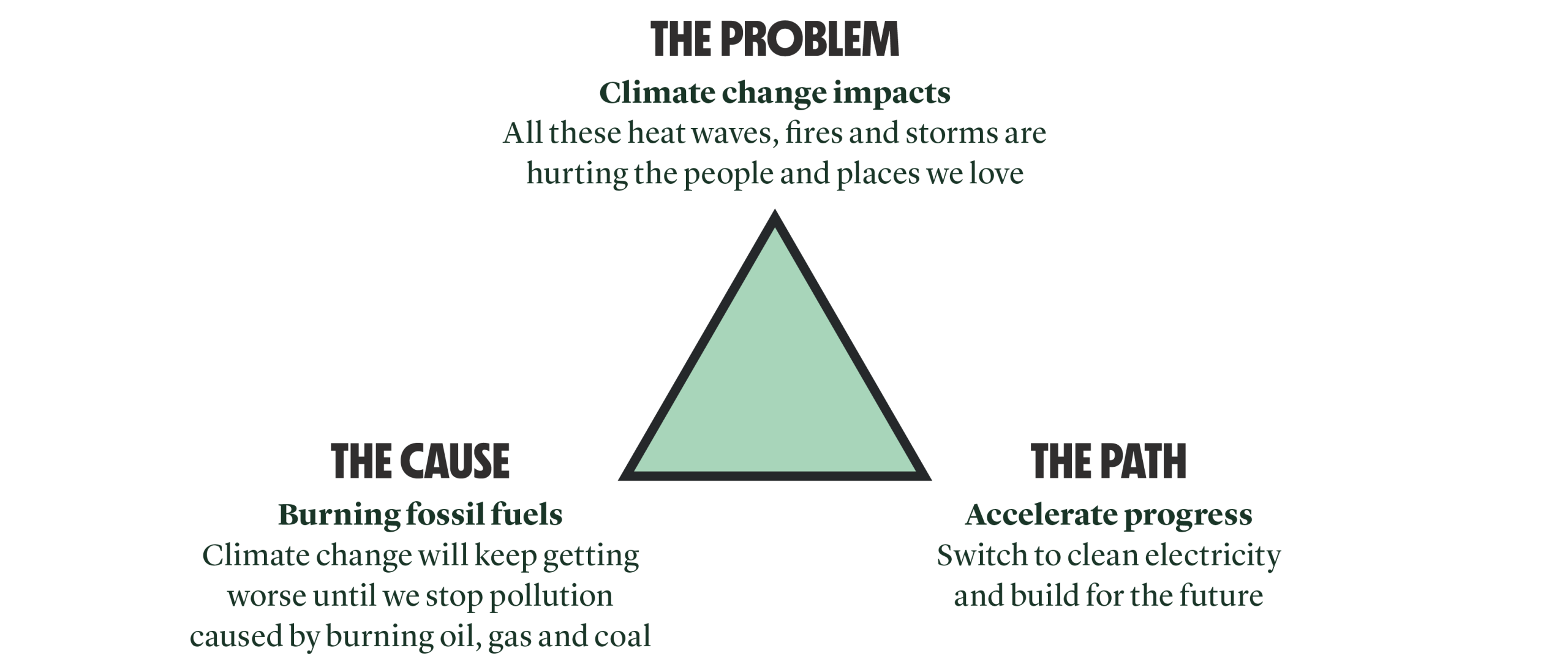
Highlight impacts and choice: between fossil fuels and a path that’s safer for people and our economy.
- Canada is making progress; it’s time to accelerate.
- Every tonne counts, so we must act now.
- Remember that there is no single “public,” and you can tailor your communication to the audience segments outlined in The Five Canadas.
Use a message triangle to remember the three points that complete a narrative.
Build momentum and social norms
People feel alone in their concern. And they don’t feel the burden of action is spread fairly.
- Build engagement with the invitation: The vast majority—eight in ten Canadians—want the government to do more. Join the millions of Canadians who want more action on climate change (Andre et al., 2024).
- Build momentum by emphasizing that Canada is making progress; now it’s time to accelerate.
- Reinforce fairness with the frame: Hold big polluters accountable with regulation.
Loss vs. gain
We’re hardwired to care most about losing things we value.
- For most people, damaging what we love—our kids’ future, nature—is the most compelling motivation. (But note that the most engaged audiences are receptive to gain framing as well as loss framing.)
- Climate change is a ticking clock. Later is too late.
The mental map
Only the most engaged audience segments clearly understand what causes climate change, so many Canadians are unclear about how to stop it from getting worse. Public conversation is usually abstract (“greenhouse gases”, “reducing emissions”).
- Focus on the main cause: burning fossil fuels like oil, gas and coal
- Amplify trusted messengers, especially scientists and doctors. Family and friends remain key sources of validation and information. Encourage a diversity of voices to speak up (Frantz, 2022).
Make your story visual
Climate change and clean energy visuals are becoming cliché. Try bringing the energy transition to life with images that spark imagination, urgency and hope.
1. Show images with real people, especially where clean energy technology feels part of everyday life.
2. Avoid clichés and overused images, e.g., empty landscapes with wind turbines or solar panels.
3. Show emotionally powerful impacts.
See Re.Climate’s How to Bring the Energy Transition to Life for examples and more suggestions.
Resources
What Do Canadians Really Think About Climate Change?
Webinar Recording
Full Report
Presentation
***
Check out Chris Hatch’s weekly newsletter, Zero Carbon
Watch the Recording
Read the Report

Our Panellists

Dr. Ghadah Alrasheed | Resource and Training Director | Re.Climate
Ghadah supports research, knowledge mobilization, and the development of resources, evidence-based tools, and training programs for Re.Climate’s network of 750 organizations and 2,000 climate influencers. With a PhD in Communication and a wealth of experience spanning the academic, federal, and NGO sectors, she brings a unique understanding of effective research and knowledge mobilization practices in climate communication.
Chris Hatch | Communications Consultant | Re.Climate
Chris currently works as a strategic consultant on energy and climate change. He is the former Executive Editor for National Observer and was previously Executive Director of Rainforest Action Network. Chris has a background in campaigns and strategic communications on clean energy, climate change, human rights and environmental issues and has worked with NGOs, First Nations, foundations, governments and corporations. He is the author of the weekly newsletter, Zero Carbon.
Dr. Melanee Thomas | Associate Professor of Political Science at the University of Calgary
Melanee’s research focuses on gender, political behaviour, and energy transition in Canadian politics. Her goal is to help identify how Canadians think about themselves in politics, explain how this is structured by gender, sexism, and racism, and then develop potential solutions that ameliorate and strengthen democratic politics. Her research has been published in Energy Policy, Electoral Studies, Political Behavior, Political Communication, the Canadian Journal of Political Science, and Politics & Gender.
