
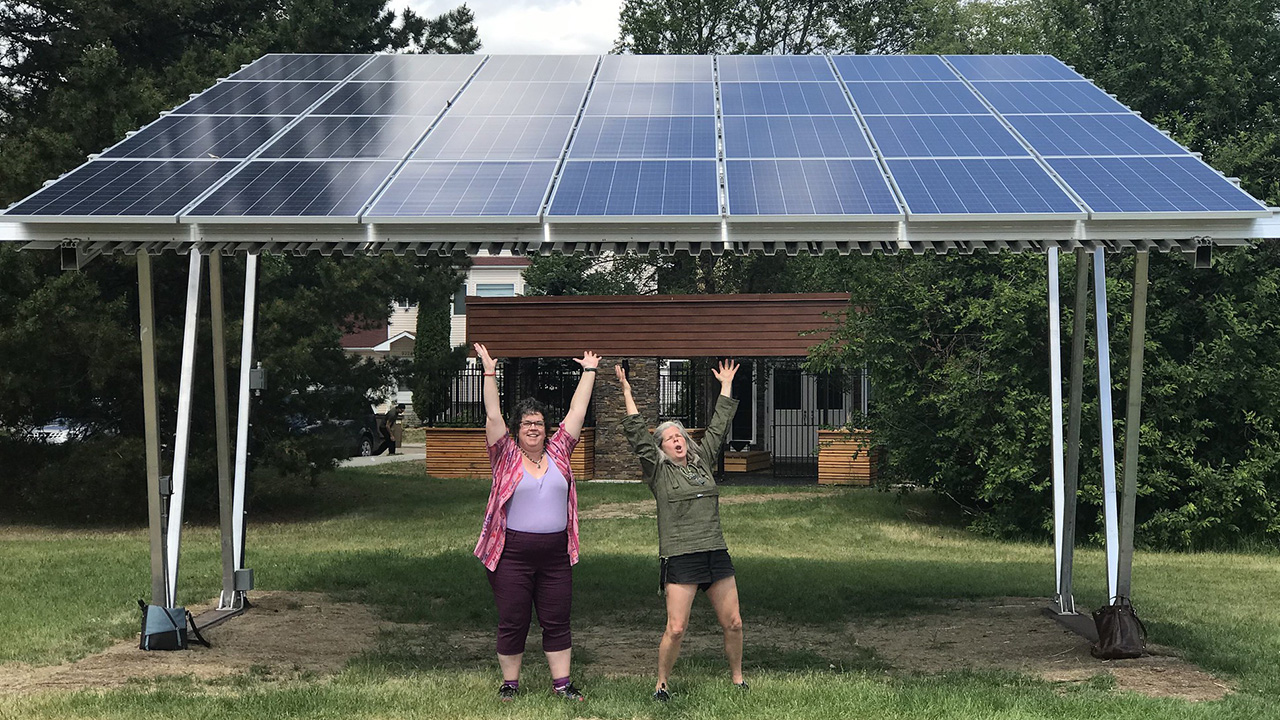
Climate change has often been shown through a few, now iconic or cliche, images, like smokestacks representing CO2 emissions, polar bears, and melting ice. Wind turbines in open fields and large solar panel arrays catching the sun have been used to represent renewable energy.
However, these iconic images are no longer as effective as they used to be. They no longer deliver the emotional or intellectual “gut punch” needed to persuade audiences. We need different images to tell new stories that make the energy transition real, tangible and attainable.
Developing Stronger Visual Language for Clean Energy
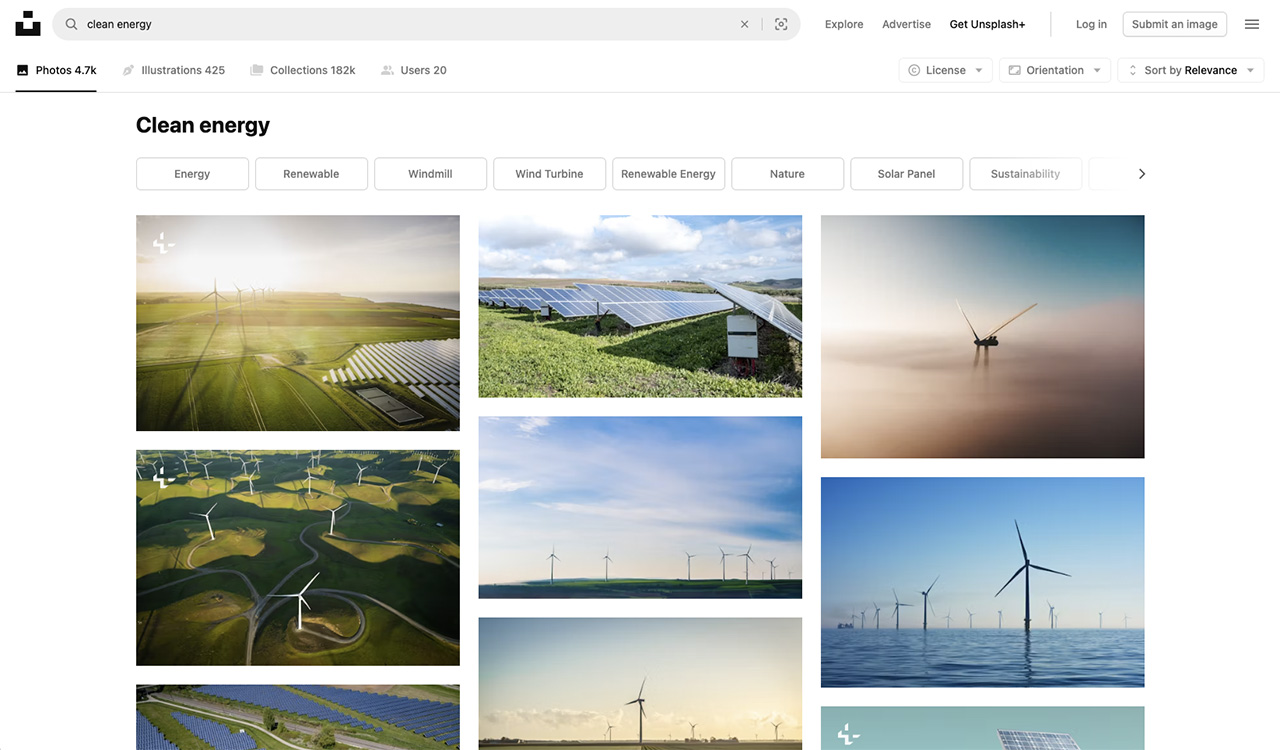
Screenshot of stock-image website Unsplash’s top results for “clean energy.” Unsplash, 2025.
Images are a significant part of effective climate communication. Images communicate things quickly, communicate complex and abstract ideas, build familiarity, and function as links between climate causes and solutions. Research from Climate Visuals, an initiative started by Climate Outreach in 2015, identified and published seven principles to tell more persuasive visual stories about climate change:
- Show real people
- Tell new stories
- Show climate change causes at scale
- Show emotionally powerful impacts
- Understand your audience
- Show local (but serious) impacts
- Be careful with protest imagery
While Climate Visuals’ principles provide a basis for effective climate communication, clean energy transitions require additional considerations for how to tell new stories, and visually demonstrate the accessibility and reliability of these technologies in use in local communities, not just in large scale clean energy projects.
So, what does this mean for climate communicators? Re.Climate has some new recommendations and a handy photo resource guide that can help.
Four New Best Practices for Visualizing Clean Energy Transitions
Based on Climate Visuals’ seven core principles for climate change visuals and research on effective communication, Re.Climate provides four best practices for visualizing clean energy and energy transitions. They were developed by reviewing academic literature, images, and communications materials, and the findings of Re.Climate’s 2024 focus groups on clean energy technology and transitions.
1. Show “in-use” images
Try to find images in which clean energy technology feels part of everyday life. How are individuals and communities using these technologies? How are individuals incorporating these technologies into their daily lives? Focusing on how people engage with the energy solution can be more persuasive than images of the technology on its own.
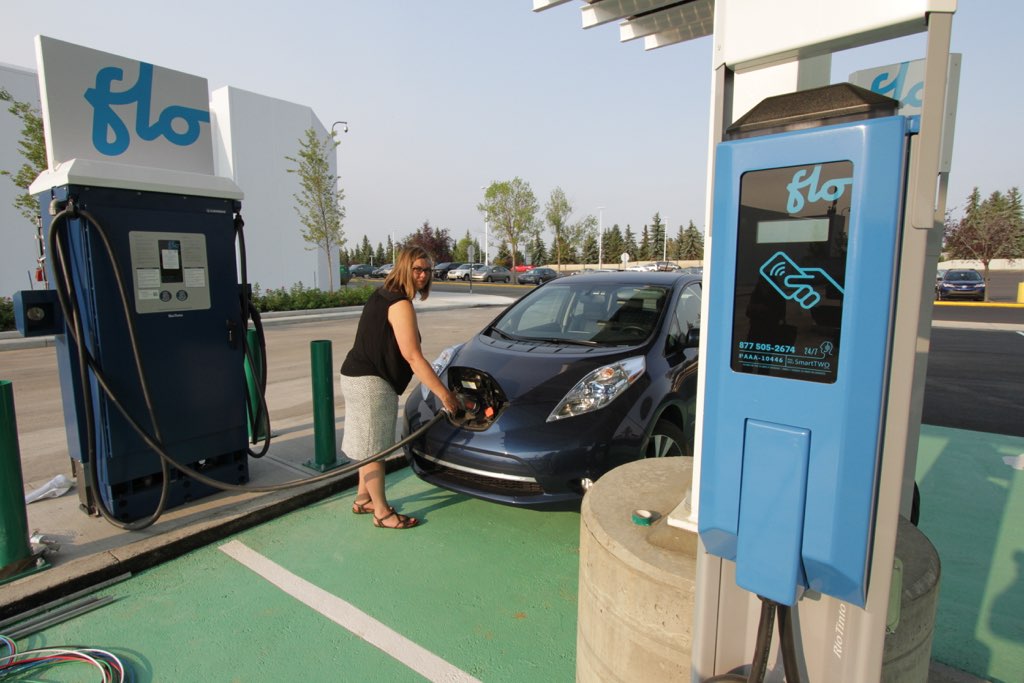
Carol Dragich-Bishop turned out to check out the Flo level 3 charger installed at Simons’ new solar-powered store. Photo: David Dodge, Green Energy Futures, 2017.
2. Avoid cliché and overused images
Steer clear of wind turbines or glistening solar panel farms and scaled, established clean energy in empty landscapes.
3. Show clean energy in new contexts
When using images of established technologies or strategies, consider how these technologies can be visualized at different scales or in unexpected environments. Balance showing clean energy “at scale” with clean energy “at home” at the individual level.
For example, instead of a solar farm, we can see how an Edmonton community used solar and other clean energies to power Sustainival, the world’s first green carnival, and how community infrastructure in Ontario provides the ideal frame for solar panels and innovative portable solar chargers.

Renewable energy everywhere: Sustainival uses biodiesel fuel to generate electricity and even has solar powered lighting systems on the site. Photo: David Dodge, Green Energy Futures, 2017.
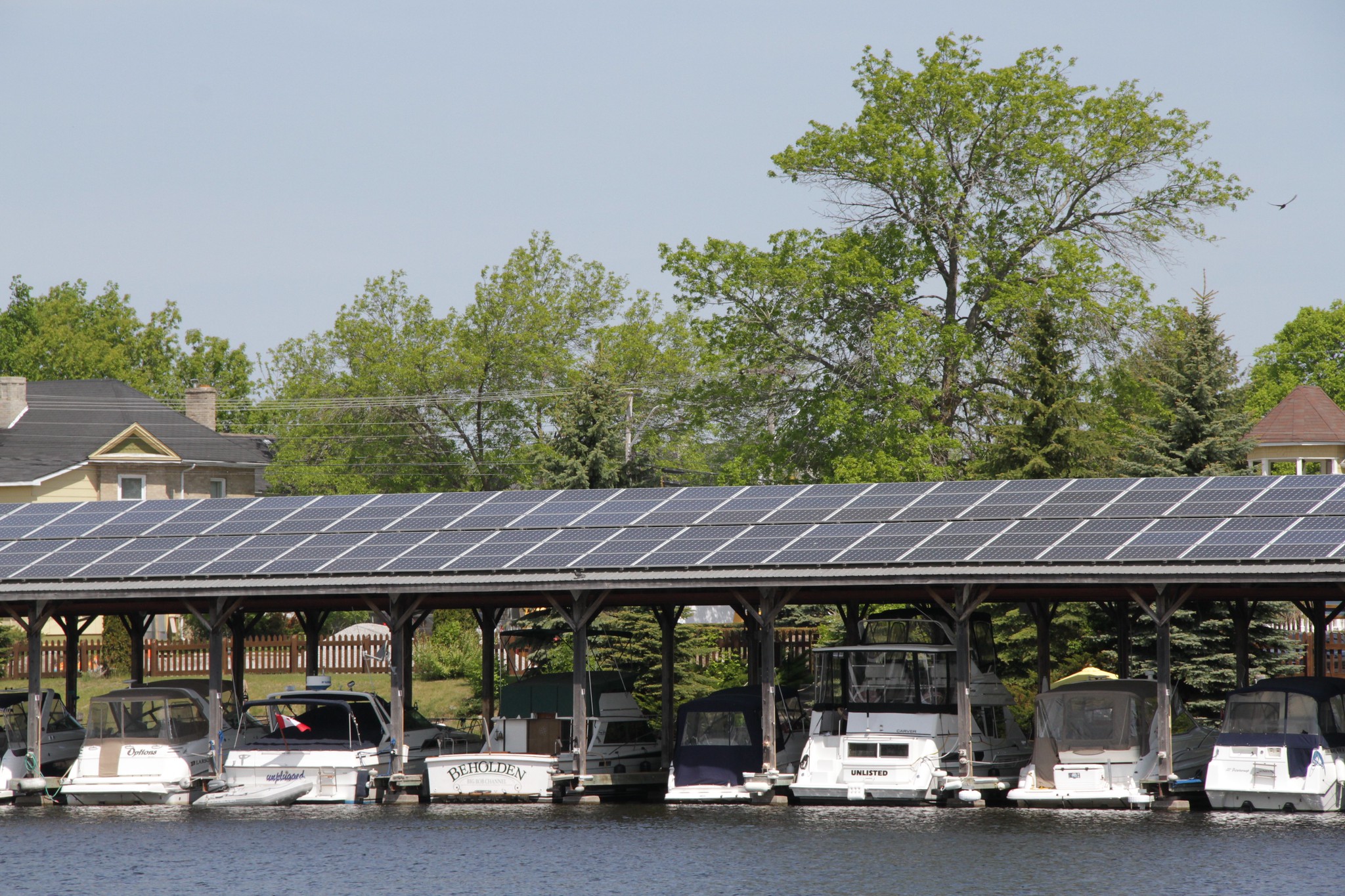
Solar shade in cottage country: A solar installation on a boat shed at Bobcygeon, Ontario. Photo: David Dodge, Green Energy Futures, 2015.
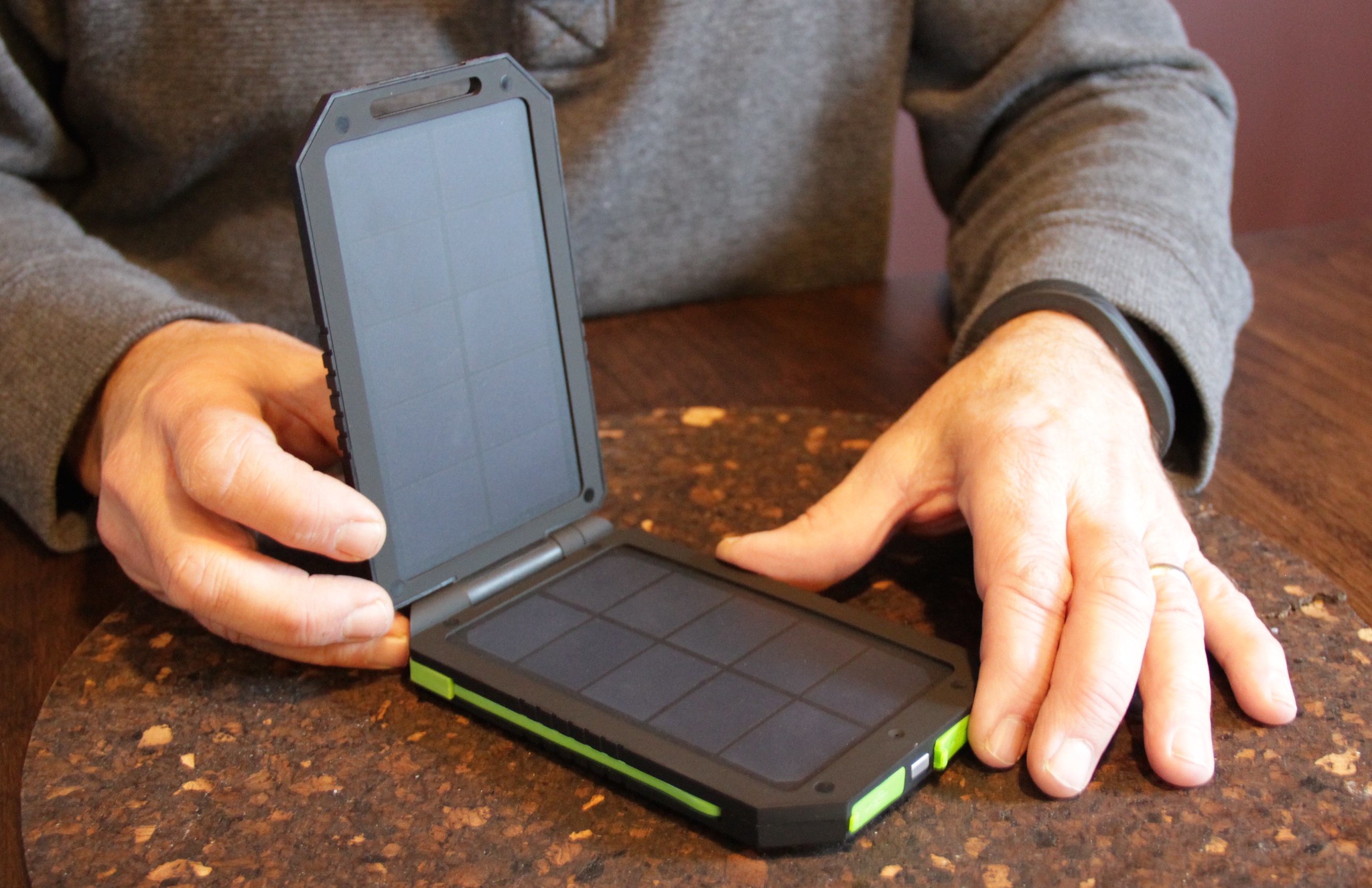
The Cobra 300 solar battery pack: A high quality solar battery pack that can charge your cell phone as many as three times. Photo: Duncan Kinney, Green Energy Futures, 2014.
4. Show the before, during and after of a clean energy transition
What do energy transitions in individual homes or within local communities look like? How does the before/after of these transitions compare? Consider highlighting the middle of the process of energy transition, like workers adding solar panels to a parking lot or the beginning of the process, for example by showing an energy auditor in a home. Show people and the choices that they make during clean energy transitions.
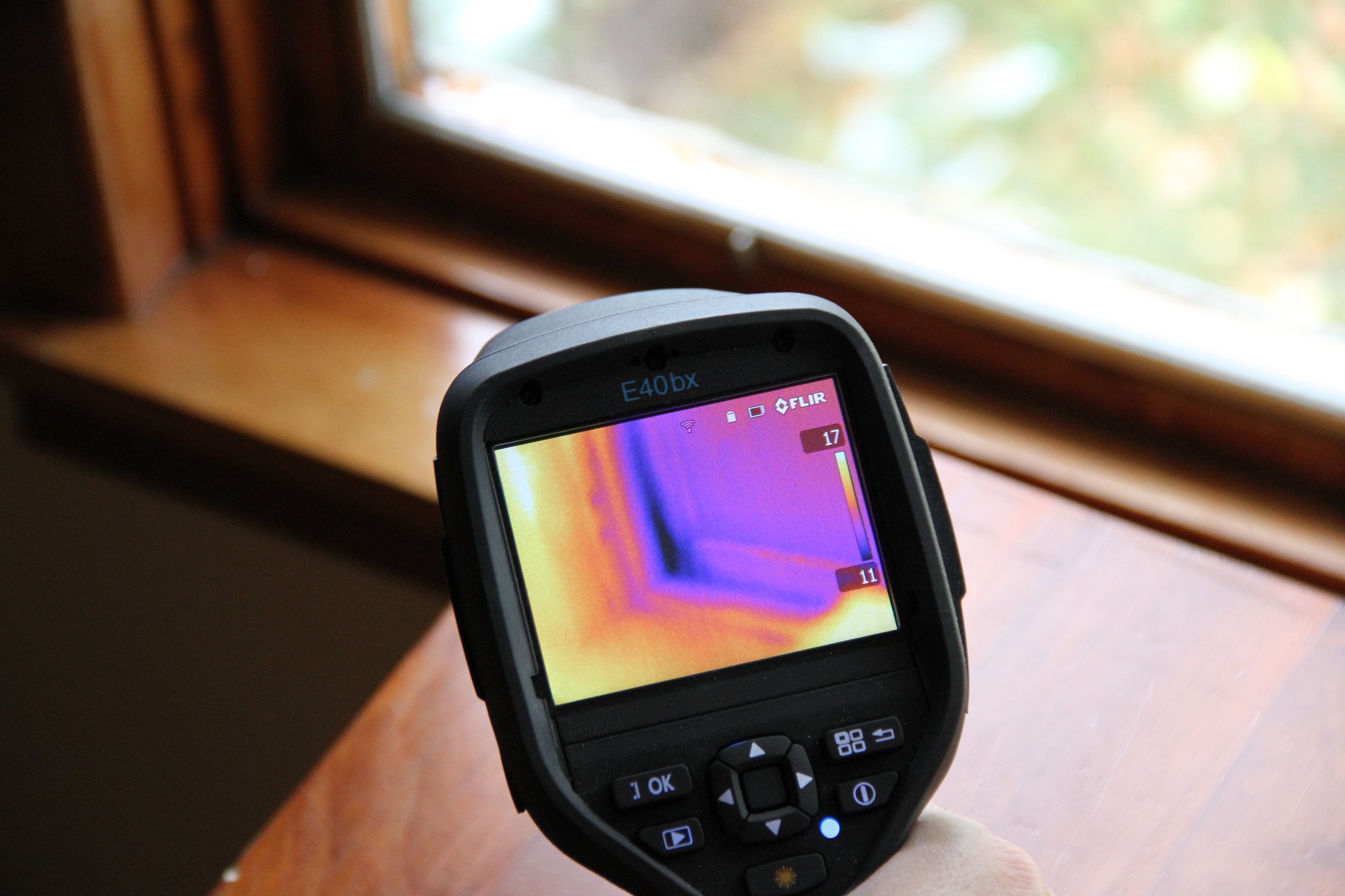
In a home audit by CReturns in Edmonton, Alberta, an infrared camera reveals heat leakage around the windows. The complete blanket of insulation and high performance R8 windows cut down on heat loss dramatically in new super insulated net-zero homes. Photo: David Dodge, Green Energy Futures, 2012.
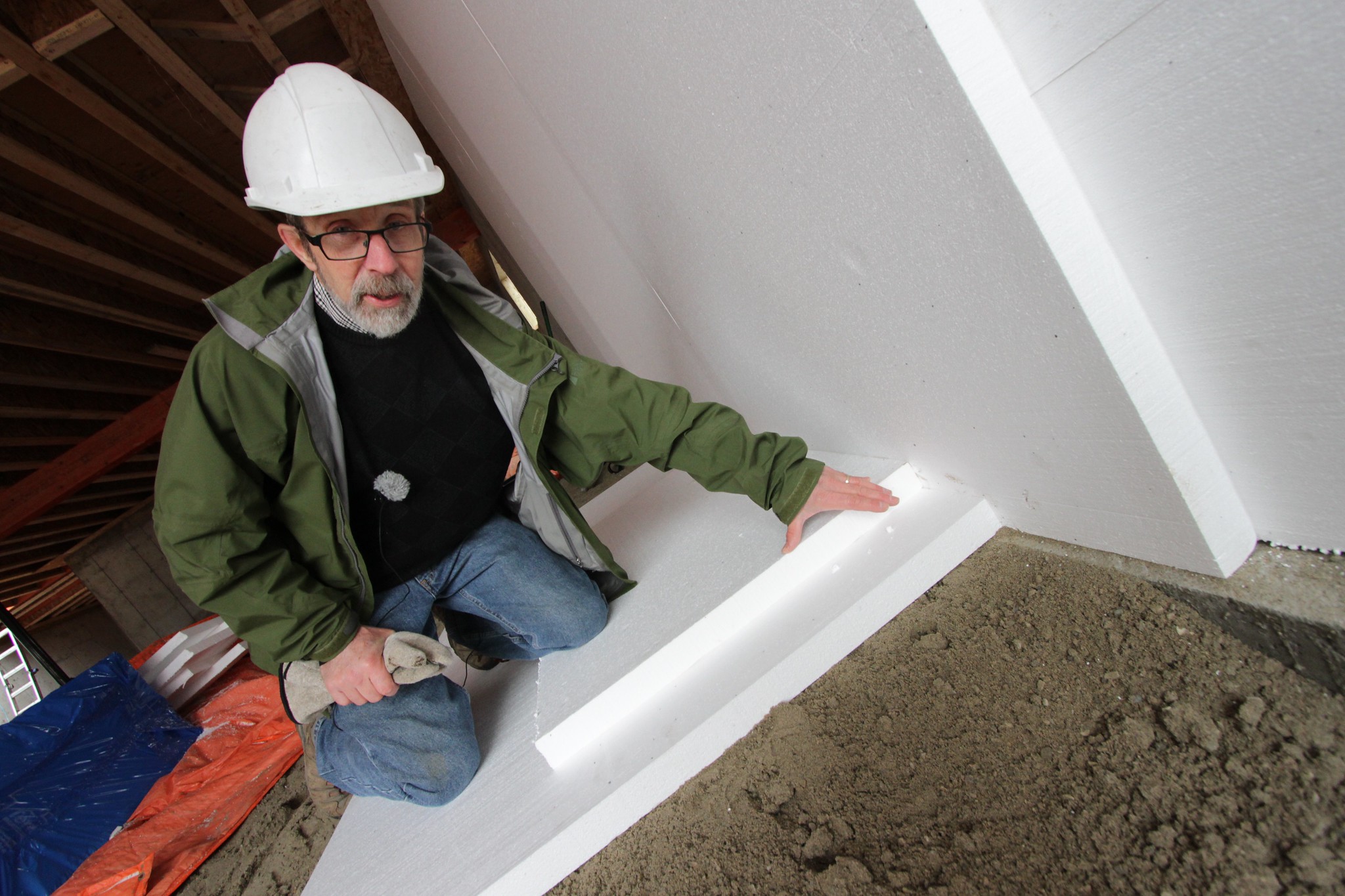
Peter Amerongen shows how Habitat Studio uses foam insulation to insulate basement concrete pads and how it butts up to insulated basement walls to form a continuous blanket of insulation in a net-zero home. Photo: David Dodge, Green Energy Futures, 2015.
Important note: Always credit the photographer and make sure the location and caption provide context for the photo’s content. If a photo doesn’t include information about where it was taken or what it shows, it’s best to find a different one to avoid any questioning of its accuracy.
Considering AI? Here’s Why You Shouldn’t
With the rise of AI, it may seem like an easy way to create images of clean energy technologies using the above best practices. Aside from issues around what images have been used to train these platforms, including stealing from photojournalists and artists, the credibility of messaging is lost if the visuals used with it are fake.
The effects of climate change are increasingly unbelievable in their scope, size, and devastation. Potential Energy Coalition has suggested that one way to respond to the increasing devastation is to discuss these disasters as unnatural. A consequence, however, is that images of the unnatural start to seem unbelievable. For example, the 2024 flooding in Valencia, Spain, left cars piled up at the end of a street in its wake. Images of this were circulated on social media, and many users commented that the pictures of the real devastating effects had to be fake.
Fake images will hurt more than they will help in promoting clean energy options and demonstrating successful energy transitions. If these energy solutions are doable and average people are making these changes, there should be evidence. Always share images of real people in real situations. You can use Re.Climate’s photographic resource list to find real and compelling images for your work.
Images are a significant part of effective climate communication. They tell us things quickly, can communicate complex ideas and produce emotional responses.
When communicators use imagery that fits in the best practices outlined above, it helps demonstrate that the energy transition is an accessible and attainable reality, not just a theoretical possibility.
Bethany Berard
Bethany is a visual culture research and teacher who works with Re.Climate on effective visual climate communication. She has a PhD in communication, with a focus on the intersections of visual culture, photography, and information. She currently works with the Office of Academic Programs and Strategic Initiatives at Carleton University on program and policy analysis and is the Assistant Editor of the Canadian Journal of Communication.
